

Sun Protection Advice For Children: 5 Must Do Suggestions
It is so important to protect your children from the sun. This article lists 5 must do sun protection for children suggestions to keep them safe. Children’s skin is more sensitive compared to our own. So, you really do need to go the extra mile to protect them.
Buy A UV Beach Shelter
When you are out on the beach, there is very little shelter from the hot weather. When our boys were younger, we had a pop up UV tent to take to the beach for extra sun protection. It proved to be a real asset for our family, especially when it was time for our youngest to have a nap.
The LittleLife Family Beach Shelter is a great option as it has a UV protection factor of 50 (meaning only 1/50th of the sun’s rays will get through. So, your children can find much needed shelter out of the midday sun.
The NHS recommend you stay out of the sun between 11am and 3pm. So, if you’re planning a full day at the beach the LittleLife Family Beach Shelter is a must pay as it can help you shelter safely during that time.
Always Use Sunscreen

The NHS recommends at least SPF 30 sunscreens to get adequate sun protection. We tended to use factor 50 and I used to apply it so thickly my friends would say I made my children look like Casper the Friendly Ghost! But I always thought it was better to be safe rather than sorry.
If your children are going to be playing in the water, you also need to make sure the sunscreen you purchase is water resistent. Plus, sunscreen should be applied regularly. On hot days you will be sweating it off or it will get washed off playing in the sea. So regular applications are a must.
You can purchase formulations that promise all day protection. But according to Tenovus results showed they didn’t live up to their promises. In Australia they do not allow once a day sunscreen to be sold, because they want everyone to regular reapply! I think that says a lot.
Make sure you apply plenty of sunscreen to the areas most prone to burning such as shoulders, nose or ears. Don’t skip sunscreen on days that seem cloudy or overcast because dangerous UV rays can still get through and cause damage. Sun protection should be applied all year round.
Don’t Forget Sunglasses
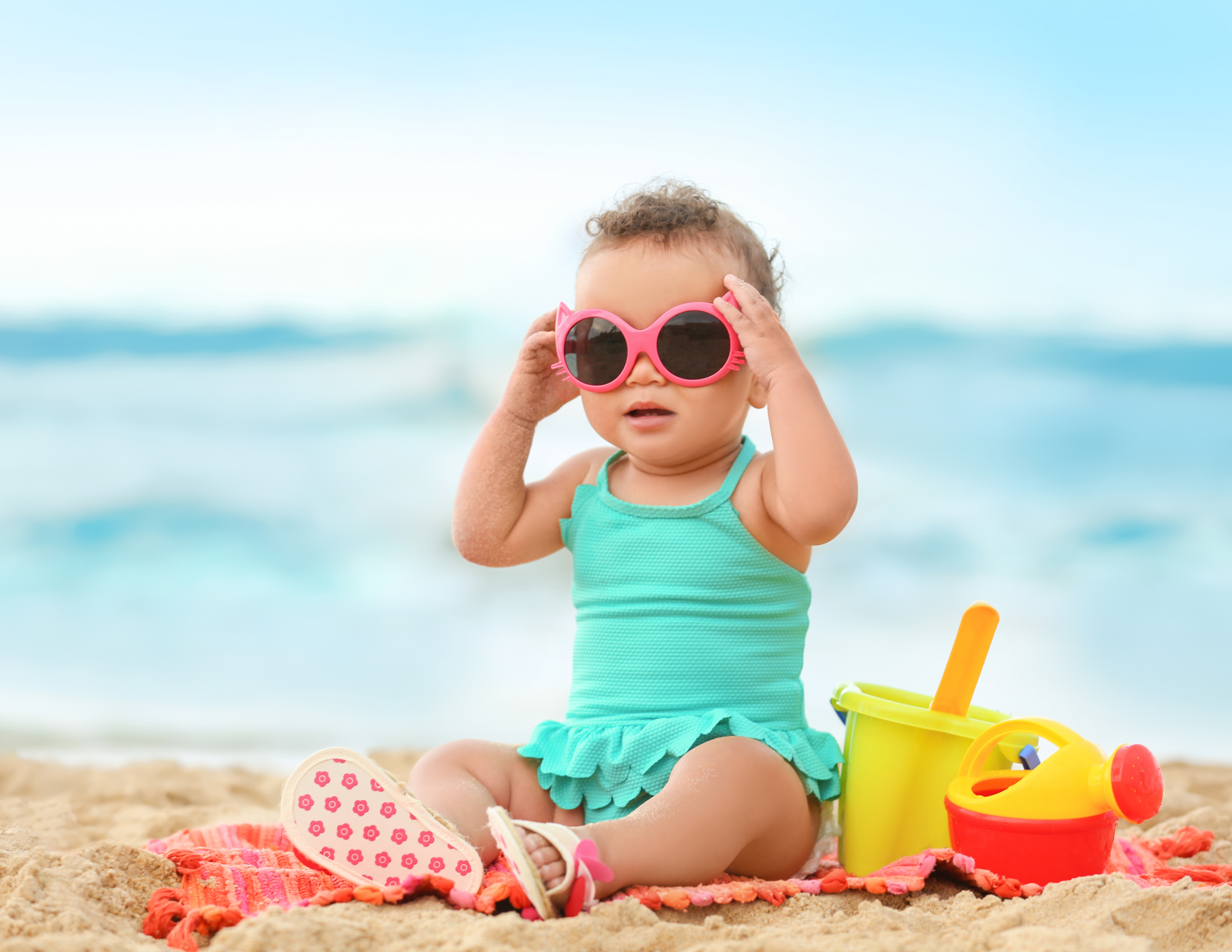
Children need sunglasses more than adults, so it’s a shame you do not see more children wearing them. Children’s eyes are still developing, and they are more sensitive to UV light. Unfortunately, their eyes cannot filter out harmful UV light as well as adults. So, make sure you don’t head outdoors without sunglasses for EVERYONE in the family!
UV Protective Clothing
As children have more sensitive skin its well worth investing in UV protection beachwear. It’s a good idea to keep shoulders covered up as they can be prone to burning. So, choose long sleeve swimsuits or swim shirts and shorts for more coverage.
Check For Sun Sensitizing Medication
Certain medications can have side effects when exposed to the sun. Acne skin medication is one example. If you are taking any medications double check if they will have any reactions when you are exposed to the sun. When applying sunscreen don’t leave the house for about 15 to 20 minutes so you give it enough time to work.
Giveaway
To help you stay safer in the sun with your children I have teamed up with LittleLife to giveaway one of their Family Beach Shelters (RRP £69.99, currently on offer for £55.99). Not only does it offer that valuable sun protection it also gives you privacy when you’re at the beach. Something that is handy for nappy or costume changes.
An added bonus is you also have protection if it suddenly rains. Your family and your belongings can stay dry until it passes. They really do make a useful base camp for family adventures to the beach.
Win a Littlelife Family Beach Shelter
The giveaway will close on the 27th of July.
Sun Protection Conclusion
With adequate care then your children should not burn. But if you headed to the beach before reading these useful suggestions then it is advisable to get out of the sun as soon as possible. Then cool the skin, a cool shower can help and using an after sun treatment. Drinking extra fluids can also help cool the skin.
Very useful for a day on the beach!
My great grandson loves the beach and we always make sure he is suitably covered and has suncream on but this would be an extra layer of protection
This would be ideal for keeping the sun off
Great for a day at the beach, make sure to have plenty of fluids and apply sun cream regularly.
It would take a bit of worry off fromt aking the children away on holiday and spending days on the beach
it gives plenty of privacy and protection, and would so useful on a day out at the coast
I would love to win as my sister has a 10 month child and we would love to take her to the beach and this would be great for her to shelter in yet enjoy the beach
Our last couple of trips to the beach have been slightly spoilt by not having suitable shade or shelter so I was looking to buy a quality product like this. Thank you for the brand intro and giveaway.
My tip would be don’t just put sunscreen on and forget it remember to reapply regularly.
This would be amazing for our holiday, a great way of keeping my little one cooler in the afternoon
I like hats, sunglasses and sun cream for staying safe in the sun and this shelter looks great for even more protection. My tip is Don’t forget to reapply sun cream because when you are enjoying yourself outdoors, it’s easy to forget!
We usually holiday in Wales where the weather is very unpredictable, so this would come in handy for sunshine and showers!
Don’t forget to suncream the tops of your ears! (from someone who knows and no longer has the top of one ear!
This would be perfect to shelter my new baby on our holiday in france
It’s a lovely way to get some shade for the kids!
For my son, he has two young children
Wear Suncream and have a hat to stop your head for burning
This would be perfect for our beach holiday to Turkey!
We are all fair skinned and it’s a great shelter while playing in the sand to help us all from being burned by the sun
This would be perfect for my grandchildren when they come to visit x
Just remember whatever your age but particularly the very young and the elderly to keep out of the sun during the heat of the day. We always take the grandchildren to the beach either first thing in the morning or after 4pm if a hot day is promised.
My teenage son has special needs, it’s hard to get him to understand how important it is to stay out of direct sunlight…he loves a tent/dens etc. so this would be perfect. We always have plenty of shade in our garden & lots of opportunity to have a drink.
my nephew would enjoy this on the beach
We’re not going away this year but going to try and do a couple of beach days so this would be perfect for that 🙂
Looks perfect for our boy to play on the beach but keep him protected from the sun
This would be perfect for the kids on the beach and keep our belongings in one area!!!
very useful for my grandson
This would be perfect for my grandchildren on beach days
Great for days on the beach
get for extra protection on the beach for the kids
What a fun way to protect kids from the harmful rays.
This is so good especially for when your little ones want to eat and the seagulls can’t get to the food and also for naps! Love it!
This would be so handy for sun and showers. Amazing !
I’d like to win as we live on the coast and often spend family time at the beach.
I’d like to win this for a friend who has a young son and would use this shelter.
Perfect for my little niece. My tip is always apply sun cream before you leave home even if it’s not sunny
This would be amazing to win for our Summer holidays.
I have a lovely new grandson, so if I was lucky enough to win this would be gifted to him.
Would love this for beach days with my boys! Ours has gone lop sided and ready for the bin now lol. X