
Exploring Creative Writing with Your Child
All children are natural storytellers. As they move through their education, some lose confidence in their abilities, whilst others flourish and begin a lifelong relationship with creative writing. If approached imaginatively, it’s possible to ignite a passion for creative writing in all children. Teaming up with an independent girls’ school in Surrey has provided me with more insights into how important creative writing and the arts in general are for children today.
A child’s early attempts
From a very young age, usually as soon as a child can speak in sentences, they will begin to tell stories of their own making. This is usually shown in their play. They will use characters from playsets, dolls and teddies or sometimes even household objects. Making up adventures which a child’s toys have been involved in can be huge fun and children will play this game for hours if you join in.
Improvisation
This is just another way of playing make-believe. You can help your child to explore fiction by making up stories as you go along. It can be done as you walk to school or to the shops with them. If something you see along the way particularly appeals to them, begin by asking them questions which they need to use their imagination to answer. For example, if you see a particularly interesting building, you can ask your child who they think lives or works in it. What might their name be. Come up with your own answers too so that it becomes a game.
Reading time
When you read to your child, it can be fun to imagine alternative endings. You can do this after you’ve finished reading a book. It’s a good idea to choose a book which they have particularly enjoyed. Ask questions such as –
- Do you think that was the best way for the story to end?
- What other ways might the story have ended?
- Which character did you like best and why?
- Who was the meanest character?
Don’t worry about the rules
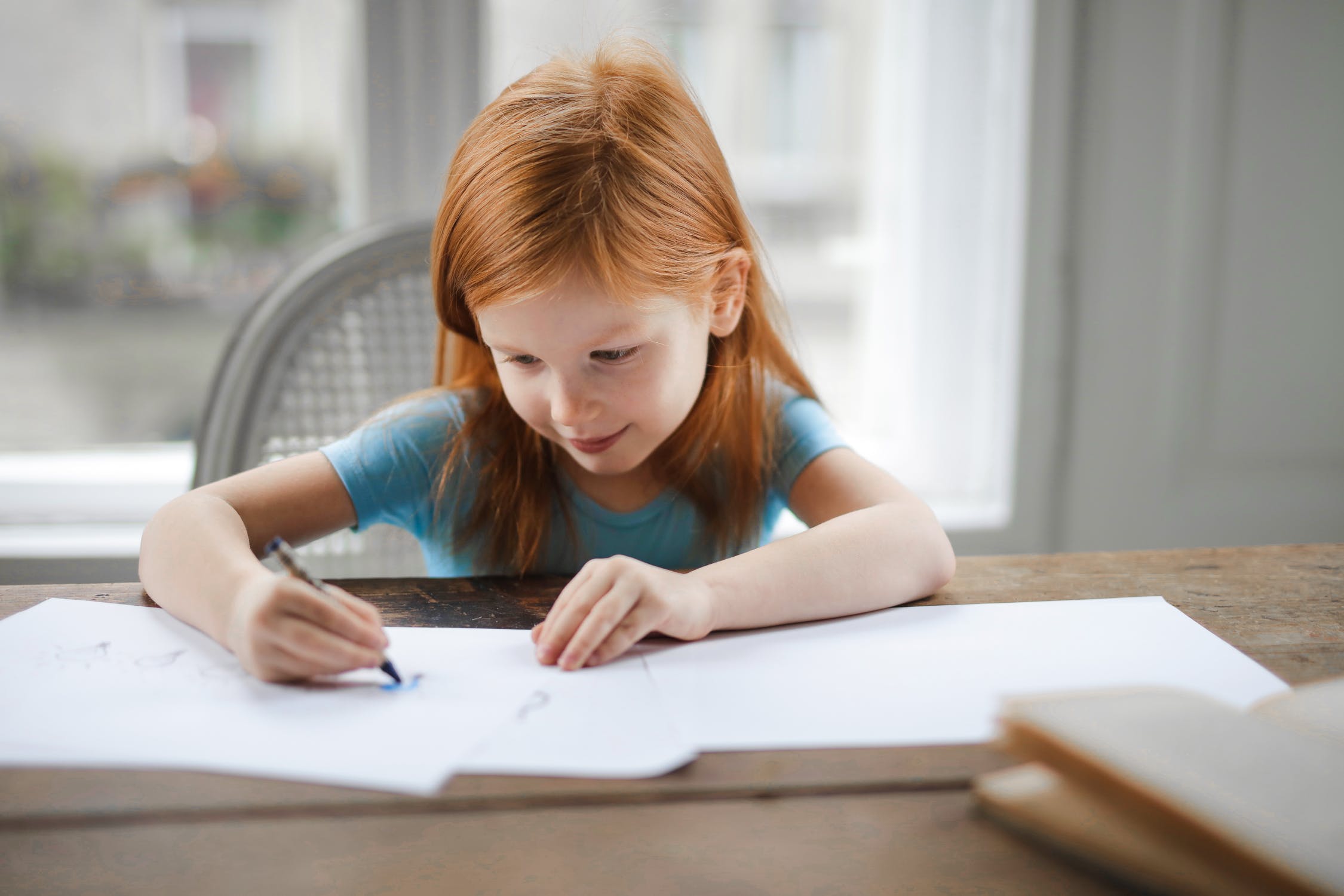
Don’t get bogged down in explaining form to your child. Encourage your child to attempt their own stories or poems in their free time. Tell them that spelling isn’t being checked – it’s finishing the piece that really matters. If your child finds this difficult, then consider helping them to write poems instead of stories to begin with. Acrostic poems are a great place to begin, because they have rules in place, it can help children to feel comfortable as they attempt to be creative. Here’s an example of an acrostic poem which was written by an eight-year-old at a poetry workshop:
Pour in the words
Organise them into a shape you like
Every word is important
Try not to make them rhyme
Rather this than maths
Yes, this is a poem.
The most important thing about this is that the child felt a real sense of accomplishment. She was not a child who had previously expressed any desire to write poetry but enjoyed the process and was proud of the results. A good tip to help children is to provide them with some word cards. Separate them into verbs and so on – offer them in separate boxes so that when the child gets stuck, they can reach in and find inspiration.
Visual stimuli
For short stories, it can be helpful to offer a child a theme or sometimes an image to use as inspiration. Choose some unusual or interesting images and share them with the child. Discuss who the people in the pictures might be, where are the places featured? Do any ideas spring to mind? Helping your child to become confident with their creative writing is a step towards helping them become confident in life. When a child knows that they can articulate their ideas and thoughts on paper, then they know they can also articulate them in life.