

What To Know When Cooking In An Industrial Kitchen
An industrial kitchen needs to be designed for practicality. At home your kitchen is a comfortable space where you can cook at your leisure. But in the industrial kitchen you have to produce a high volume of meals, with consistent quality and quick service times.
Not all industrial kitchens have the luxury of space, some will have to choose cookers on a smaller scale. Such as this industrial electric cooker which although petite in size it delivers with quality and performance. This is a good appliance for cafes or bars.
However, in an industrial kitchen you do tend to be cooking on a much larger scale. Often the appliances are bigger so lots of people can access them at the same time. It is quite a different experience from cooking in your own home. You need very durable appliances as they are going to be used so much more!
Quicker Start Times
Industrial appliances might have different features which make them a better choice for your kitchen. For example, this industrial fryer has a quick start up time so you can get meals out to your customers quicker.
Customers do not like long wait times, 30 to 40 minutes tops. If food takes too long to come out of the kitchen, then they might expect a discount which costs your business money. Also, they could be tempted to leave a bad review. Unfortunately, those types of reviews can eat into your profits as anything negative can put people off visiting your establishment.
Designated Areas
In an industrial kitchen there does tend to be designated areas. If you have ever watched Hell’s Kitchen, you will know what I mean. Fish, vegetables, poultry and meat all have separate areas. It is a good idea to keep raw food separate to food that is cooked. You need to minimise harmful bacteria. Cooking kills off bacteria so the last thing you want is the cooked food then to make content with raw food. Food poisoning is never pretty and when you are a business it can make or break you! There can be big fines or even a prison sentence. So, make sure you get it right!
Stainless Steel
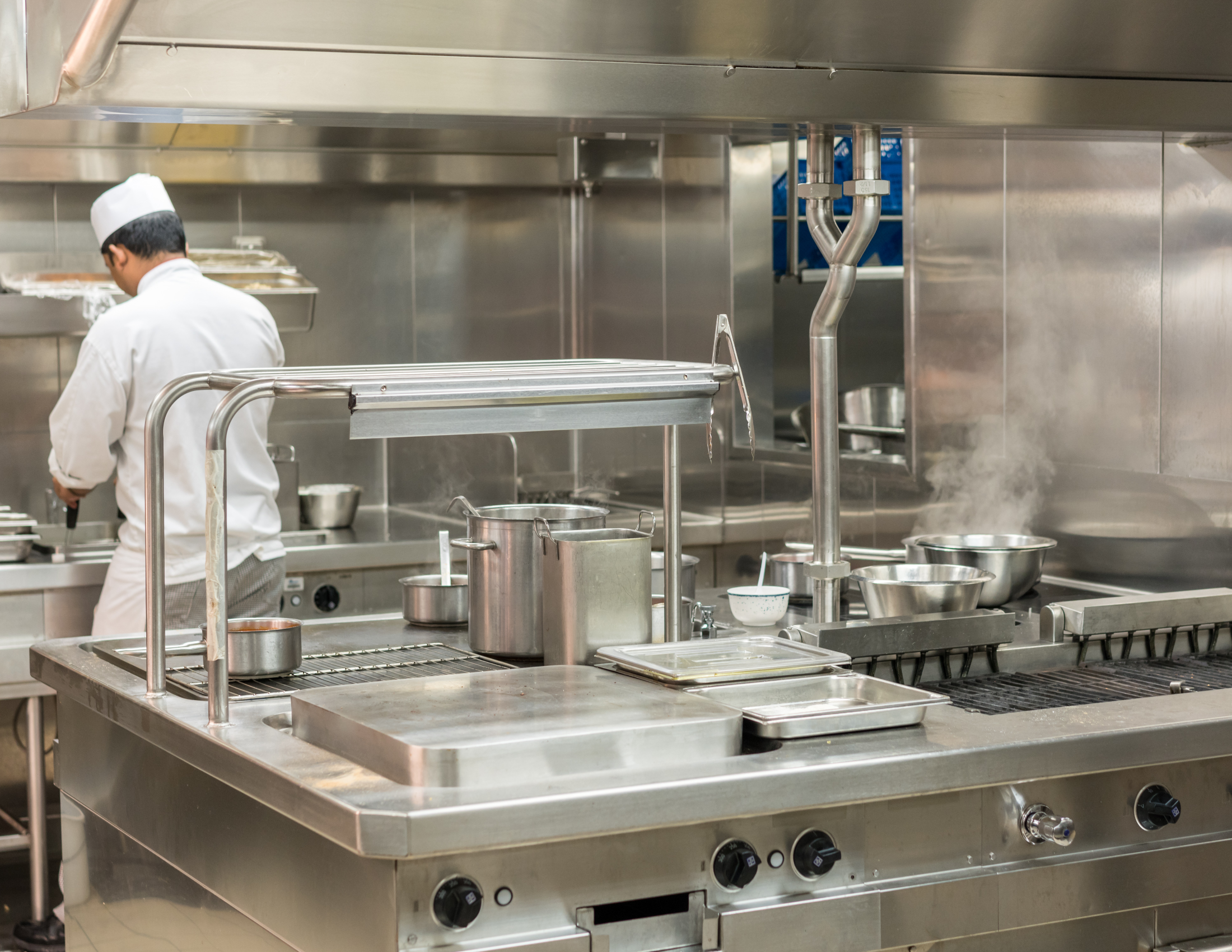
You will have noticed that industrial kitchens are usually all stainless steel. There is a good reason for this. If they had used wood or plastic the danger is germs would get into the material and cause customers to be unwell eating in your establishment.
You would think they might have to worry about the worktops and appliances getting rusty from spills – some chefs can be so messy; my brother was a chef I have seen him in action! But fortunately, stainless steel is very resistant to corrosion so it’s a fantastic material for commercial kitchens. Whereas in your own kitchen at home you will have other considerations.
Different Layouts
There are different layouts you can have for an industrial kitchen. Primarily they are the assembly line, a galley layout, an island with everything happen in the center of the kitchen, an open kitchen (where you can see what is going on when you are eating!) or a zoning layout (where everything has its own zone!).

Whatever layout you opt to go for you should have had some things to consider. Such as the flow of the kitchen and level of efficiency, how easy the layout is for cleaning up afterwards and whether you have enough staff to man different zones. Basically, you want to make sure that production levels are always maintained. An open kitchen shown above also has some extra advantages customers enjoy being able to watch what happens in the kitchen. It can help them see how clean the space is and the quality of the ingredients. Although it does mean the chef’s are on show the whole time which can be a bit daunting and stressful for them.