

Five Skin Conditions that May Occur During Pregnancy
Along with the delight and pleasure of being pregnant and expecting a new baby come the huge changes to the body. Plus the often less-than-perfect skin that can follow! Of course some new moms-to-be find that their skin improves and is blemish free and glowing for the first time in their lives. Others are not so lucky. They might be prone to one of these five skin conditions.
Good nutrition is vital for your developing baby. But also contributes to the strength and health of your skin, along with hydration. So make sure you drink those 8 glasses of water daily and take your vitamins. Hopefully by following these suggestions you should see an improvement in the condition of your skin.
Five Skin Conditions that You Might Encounter During Pregnancy
1. Acne
We always tend to think of acne as a teenage problem. However you might be surprised to know how many develop acne as adults and this of course can also happen during pregnancy. This is a time when the skin is more sensitive and the hormonal balance is affected. It is vital to wash the skin with lukewarm water and a natural cleanser two or three times a day. Acne is caused by the overproduction of sebum which is an oily substance that forms in glands just under the surface of the skin. In normal times, this sebum flows out of hair follicles from the glands onto the skin to act as a natural skin moisturizer.
But during times of hormonal upheaval such as pregnancy, a blockage can develop in the pores – made up of sebum, dead skin cells and bacteria. The blockage is only microscopic at first. Yet as it gets bigger, it develops into a blackhead or whitehead. Most of the sebaceous glands are found on the face, neck and back. This is where acne appears.
2. Chloasma
This is a condition that results in brown or yellow type patches of skin on the face. Some have given it the name of the “mask of pregnancy”. This discoloration or darkening can appear in those areas around the eyes or the forehead, the bridge of the nose and on the cheeks. Again it is another hormonal effect as progesterone and estrogen stimulate melanin cells in the skin to produce more pigment. Intense sunlight can aggravate the condition. The good news is that the skin will go back to its normal self after the birth of your baby.
While it is a good idea to avoid too much sunlight on your face, make sure to place the rest of your body in direct sun for 15 to 30 minutes daily. Depending on your skin tone as the darker your skin, the longer you need. Sunlight is vital to boost and maintain your vitamin D levels for health reasons and to ensure you manufacture vitamin D in your breast milk for your new baby. If you cannot get sufficient vitamin D from the sun (for example because of being in a cold climate) then supplement with vitamin D3.
3. Linea Nigra
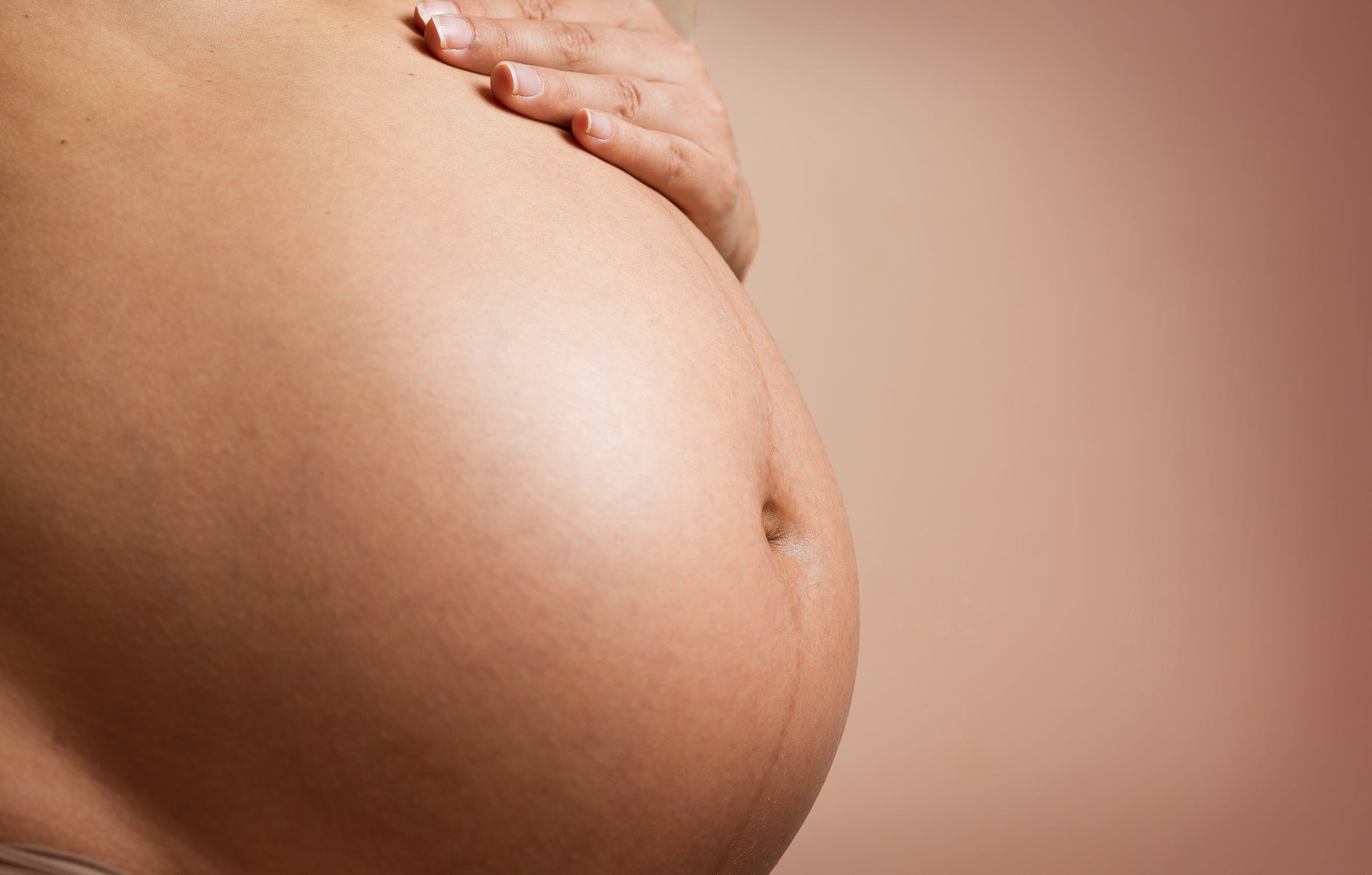
This is when those busy stretching tummies develop a faint brown line from the navel to the pubic bone. This line is caused by hormonal changes during pregnancy and will usually disappear after the birth of the baby because the hormones will return to normal and the skin will renew itself.
4. Pigmentation
This is when the nipples (and that area around the nipples known as the areola) can become darker and might continue to remain darker even after the birth of the baby. Another fact that some moms-to-be notice is that their moles and freckles also become darker and even more prevalent.
5. Stretch Marks
Any area on the body from the knees upwards can be prone to stretch marks. Stretch marks are tears in the lower layer of your skin. When the skin is stretched to its limit, it tears slightly. This allows blood vessels to show through. If your mother or an older sister had stretch marks when they were pregnant, then you are more likely to. It makes good sense to do what you can to reduce the chances or severity of stretch marks.
When you are pregnant as your body can grow so rapidly that the skin cannot produce enough new tissue. Try to limit your weight gain and ensure it is as gradual as possible so the skin can stretch at a steady rate. Along with hydration, you can help to avoid stretch marks by using a brush or wash cloth to massage the areas where you have noticed stretch marks or want to prevent them occurring to increase circulation to the area. Include foods rich in zinc in your diet such as nuts and fish as well as those high in vitamins A, C and D. Such as carrots, citrus fruits and milk and those foods rich in protein such as eggs. Avocados are especially good. Be sure to moisturize your skin for the whole of the pregnancy.
If you know what skin conditions you can expect during pregnancy, they will not come as such a surprise and you will be prepared.